

Orange Currant Scones Recipe
These orange currant scones are tall, buttery, and lightly sweet, with crisp golden edges and a tender crumb. Sweet dried currants and fresh orange zest add just the right balance of fruity sweetness and bright citrus flavor. Generously sized, bakery-style scones, they are especially good warm from the oven with a cup of coffee or tea.
I’ll give you variations and substitutions where I can, plus helpful tips and tricks for success. Read on for this info as well as the recipe. If you’d like to skip straight to the recipe, use the jump to recipe button at the top of the post.
You may also be interested in my fresh cherry scones and my pumpkin scone recipe. For ease of browsing, you can find all of my breakfast and brunch recipes in one place.

Why You’ll Love This Recipe
🍊 Tender & Buttery — Soft, tender crumb and just the right amount of butter means these scones won’t be dry and flavorless.
🍊 Bakery Style — These scones are tall, tender, and generously sized, just like the ones you’d find at your favorite bakery.
🍊 No Mixer Needed — The dough comes together by hand, so there’s no need to pull out a stand mixer.
Pook’s Pantry participates in affiliate programs. If you make a purchase through one of my links, I may earn a small commission. For more information, please see my disclosure policy.

Orange Currant Scone Recipe
I’ve been thinking about currant scones for at least a year. I’ve tested them with buttermilk and with cream, with and without orange zest, baking them snugly together, or giving them room to breathe. I finally landed on a recipe that I think works well, and I hope you’ll agree.
What you need to know
If you’ve never baked with them before, you might be wondering, “What are currants?” Dried currants are small, dark, seedless dried grapes with a naturally sweet, slightly tart flavor. They are much smaller than raisins, which makes them perfect for baked goods like scones because you get a little bit of fruit in nearly every bite.

Buttermilk scones, like these, tend to be slightly more tender than cream-based ones. The acid in buttermilk breaks down the proteins in flour to help create a soft crumb.
For best results, work quickly once you add the buttermilk. The acid activates the leaveners, while the butter will begin to soften as the dough sits at room temperature. Don’t let the dough sit for long — you want to get the scones chilled before the butter becomes too warm.

Ingredients
These tender buttermilk scones with dried currants and fresh orange zest are made with pantry basics you probably already have on hand.
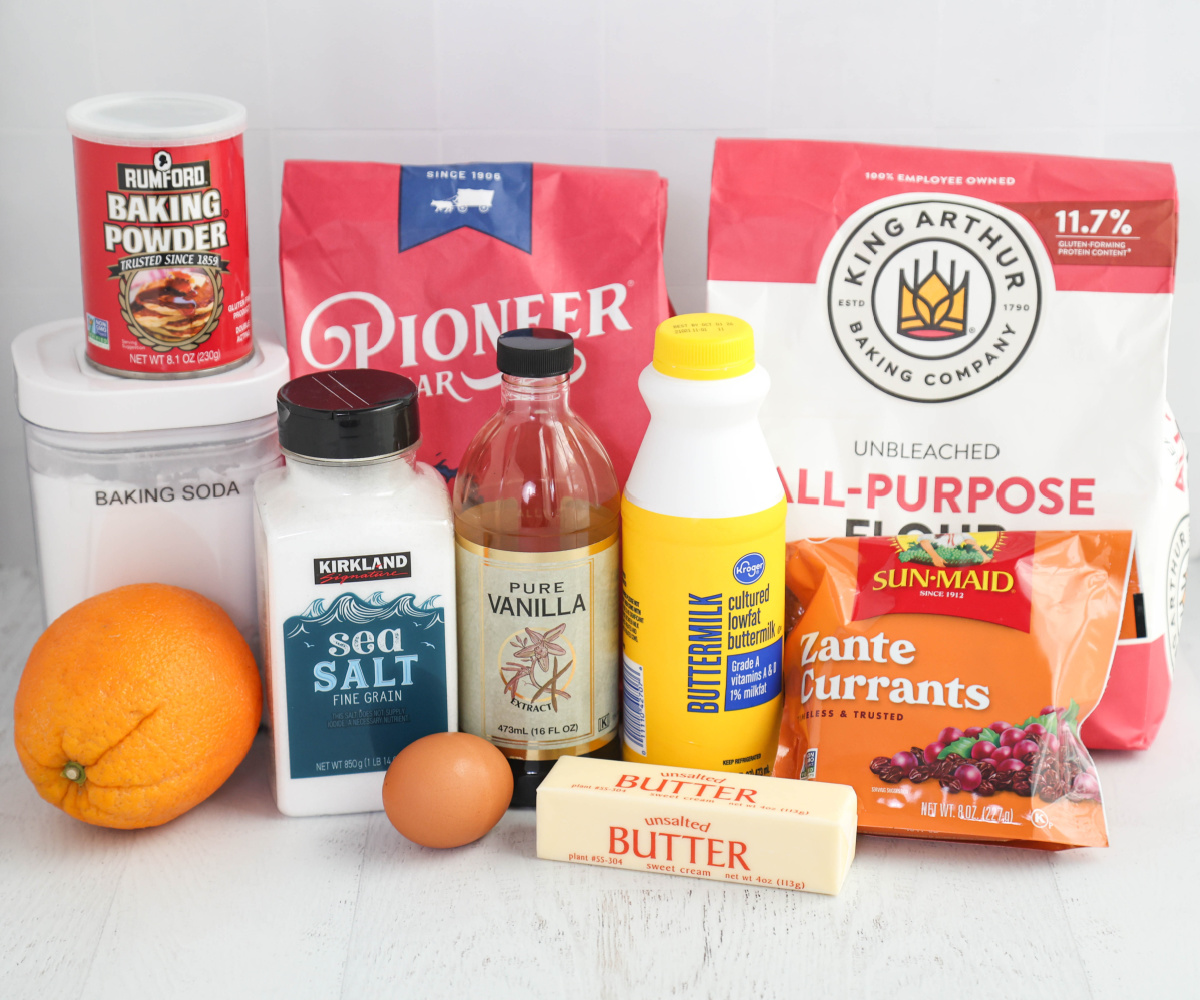
- All-purpose flour — The base of the scone dough, it provides structure.
- Granulated sugar — Adds sweetness and helps the scones brown.
- Salt — Balances the sweetness and enhances the other flavors.
- Baking powder — Helps the scones rise and gives them a tender texture.
- Baking soda — Works with the acidity in the buttermilk to help the scones rise.
- Unsalted butter — Gives the scones their rich, buttery flavor and tender texture.
- Buttermilk — Adds a subtle tang and helps keep the scones tender.
- Egg — Adds richness and helps bind the dough together.
- Vanilla extract — Adds a little extra depth to the flavor.
- Dried currants — Add small bursts of sweet-tart flavor throughout the scones.
- Orange zest — Adds bright, fresh orange flavor without adding extra liquid to the dough.
How to make
Here’s a quick summary of how to make orange scones with currants. Please see the recipe card at the bottom of this post for the full recipe.
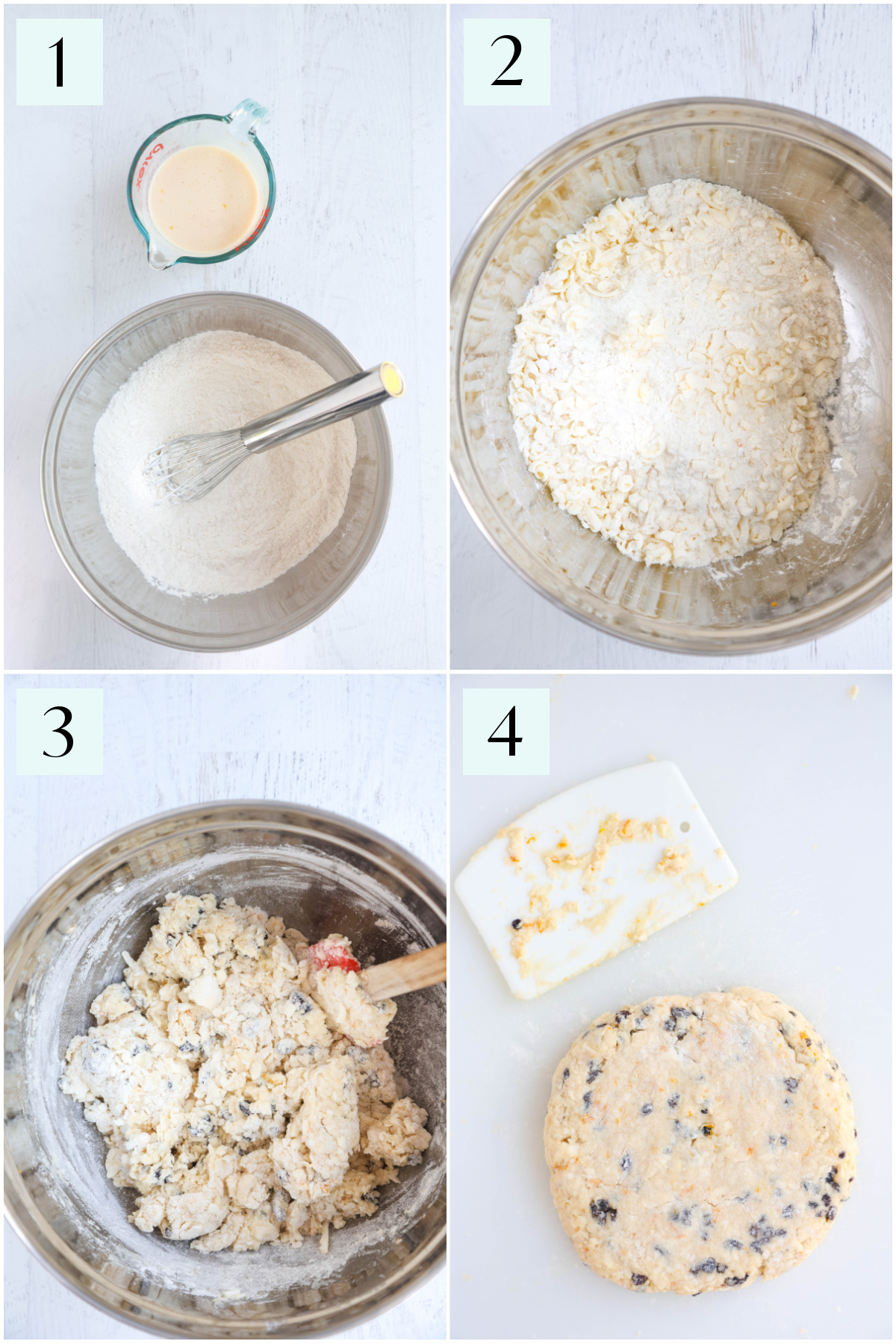
- Prep: Preheat oven to 400°F / 200°C. In a large mixing bowl, combine dry ingredients and whisk together. In a smaller bowl, or measuring cup, whisk together buttermilk, egg and vanilla.
- Add: Grate frozen butter into dry ingredients, add orange zest, and toss to coat butter and zest with flour. *You can also dice butter into small pieces and cut in with a pastry cutter (also called a pastry blender).
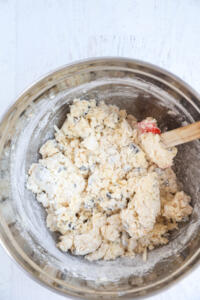
- Combine: Pour the wet ingredients into the dry ingredients, and use a fork to lightly mix until just combined. It will be a shaggy dough.
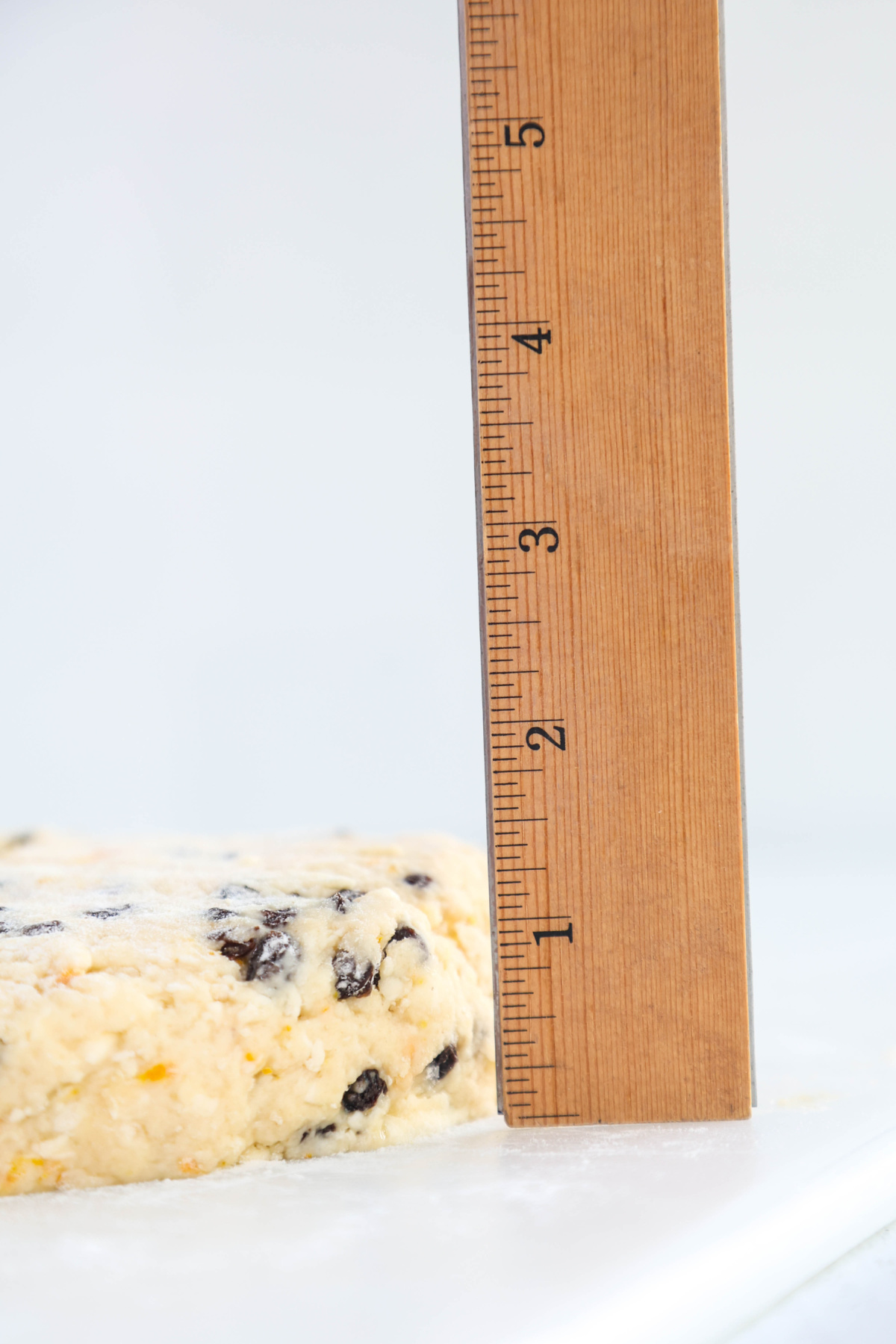
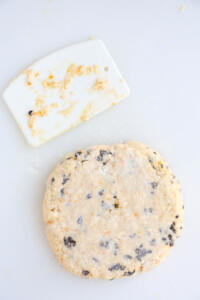
- Shape: Using your hands and a flexible bench scraper to form the dough into a circle measuring roughly 1 1/4 – 1 1/2 inches tall and 7 – 8 inches across. Wrap in plastic and freeze for 20 minutes.
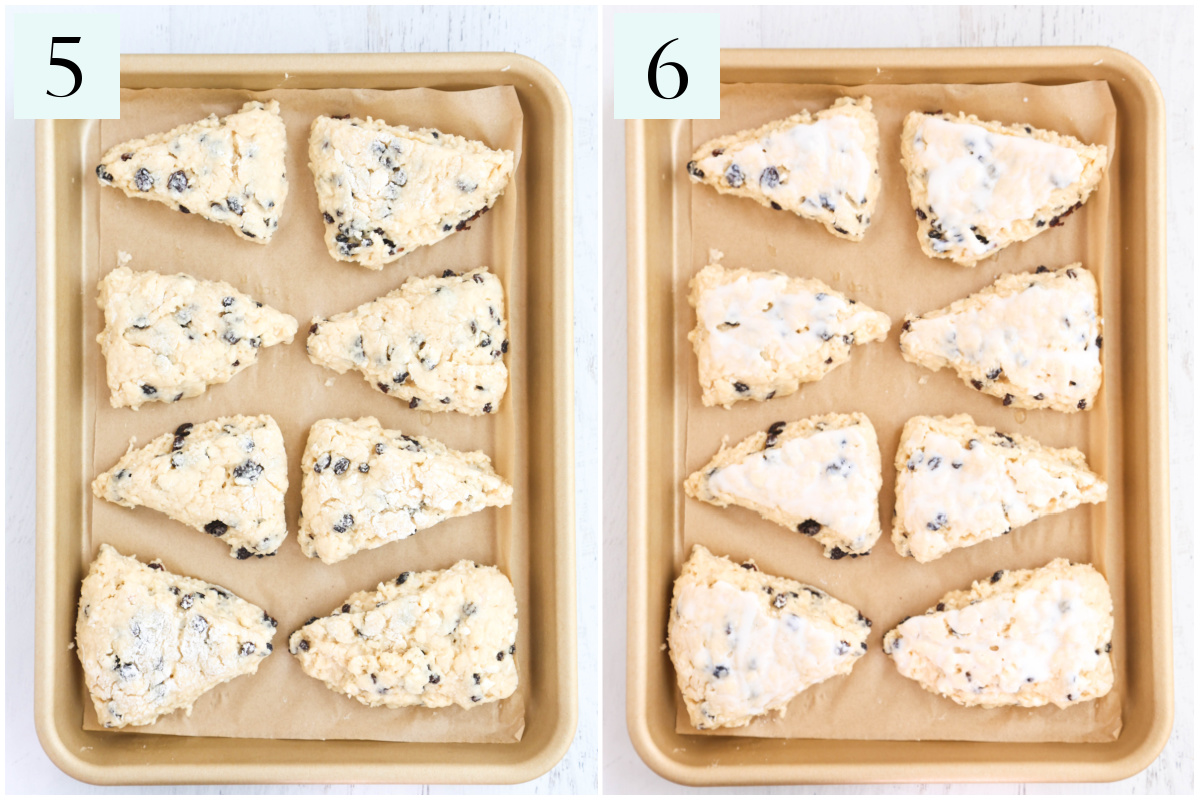
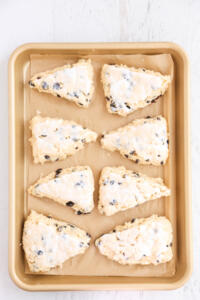
- Cut: Slice the dough into 8 wedges (or 6 for large, bakery-style scones).
- Brush: Using a pastry brush, brush the tops of the scones with buttermilk, then bake until golden brown.
Would you like to save this recipe?
Chef’s Tips for Success
- Keep the butter cold — Put the butter in the freezer for 30 minutes to make sure it is VERY cold before grating into dry ingredients.
- Don’t overwork the dough — Don’t handle the dough too much while combining the wet and dry ingredients, or while forming dough into a disk.
- Don’t add too much flour — I put a bit of flour into an empty spice jar and lightly sprinkle it over the dough to avoid adding too much flour, which can make your scones tough.
- Use fresh orange zest — Fresh orange zest will give your scones the best flavor.

Orange Currant Scones FAQ’s
The most important factors are using cold butter and chilling the dough before baking.
Freeze the shaped, unbaked dough and bake straight from frozen (add a few extra minutes), or bake ahead and gently reheat before serving.
No. Fresh currants are tart berries, whereas dried currants are a variety of a tiny seedless grape. Fresh currants will add too much moisture to the scones.

Storage / Freezing Information
To store: Cool completely, then store in an airtight container for 2 – 3 days at room temperature. For best results, store unglazed, as the glaze can melt and get sticky.
To freeze: Store unglazed, baked scones in an airtight container or zip-top bag in the freezer for up to 3 months. You can also store the unbaked dough in an airtight container or freezer bag for up to a month or so.

Variations and substitutions
- Swap raisins or dried cranberries for currants — If you can’t find currants, you can swap them out. One thing to note: Dried currants are smaller and more tart than raisins or dried cranberries, so they may yield a slightly sweeter scone.
- Add a simple orange glaze — For a sweet topper, make a simple orange glaze to drizzle over the scones.
- Try lemon zest instead of orange — If you prefer a bright, tart flavor, lemon zest will deliver.
- Add chopped nuts — Do you like a little crunch? Add some toasted pecans.
Please share
If you love this recipe, please give it 5 stars!
I hope you love this orange currant scone recipe as much as we do! Please consider rating and/or commenting.
Your shares help this site to grow and I appreciate it so much. Do you know someone who would like this? I’d love it if you would share it on Facebook or pin it to your favorite recipe board.

Orange Currant Scones
Ingredients
Orange Currant Scones
- 2 cups all-purpose flour 240g
- ⅓ cup granulated sugar 67g
- 2 teaspoons baking powder
- ½ teaspoon baking soda
- ¾ teaspoon salt
- 6 tablespoons butter unsalted, frozen and grated / 85g
- ¾ cup currants 90g, chilled
- 1 tablespoon fresh orange zest from 1 – 2 oranges
- ½ cup buttermilk 135g / 120mL
- 1 egg
- 1 ½ teaspoons vanilla extract
Orange Glaze
- 1 cup powdered sugar 115g
- 1 ½ tablespoons fresh orange juice
- 2 teaspoons orange zest
Instructions
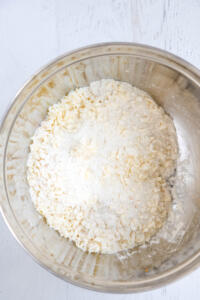
- Place your butter in the freezer. In a medium mixing bowl, whisk together flour, sugar, baking powder, baking soda, and salt.
- Grate frozen butter (watch your fingers!) into the dry ingredients, and work the butter into the flour with a fork. *You can also dice the butter into small pieces and use a pastry blender to cut the butter into the flour until you have pea-sized pieces.

- Add orange zest and dried currants to the flour mixture, then toss to coat in flour.
- Whisk buttermilk, egg and vanilla together in a separate bowl or measuring cup. Make a well in the middle of the flour mixture, then pour in wet ingredients. With a fork, gently work the flour into the buttermilk mixture, until a shaggy dough forms.
- Dump the shaggy dough out onto a lightly floured cutting board or countertop. Using a flexible bench scraper and/or your hands (see note), fold the dough over on itself, then gently pat it out just to flatten, then repeat once more. *Bring the dough together by patting it, rather than rolling it.Form the dough into a circle, about 1 ½ inches high, and 7 – 8 inches wide. Wrap the dough in plastic, and freeze for 20 – 30 minutes.
- Preheat oven to 400°F / 200°C while scone dough is chilling.
- Remove dough from freezer, cut into 8 wedges, place on a parchment-lined baking sheet and brush with buttermilk.*If your scone dough has started to warm up, place the wedges of dough on the baking pan, and put them back into the freezer for 15 minutes.
- Bake for 20 – 22 minutes, until golden brown on top. Place on a wire rack to cool.
- Whisk glaze ingredients together in a small mixing bowl, drizzle over completely cooled scones. *Glaze is optional, but delicious.

Chef’s Notes
- My hands often run hot, so I prefer to use a flexible bench scraper to avoid heating up my dough.
- If you are baking on a warm day, or your kitchen is on the warm side, you may need to chill the dough again after cutting into wedges. You want the scone dough to be VERY cold before baking.
- I’ve tried this recipe with cream v buttermilk – I found the buttermilk gave it more flavor. That being said, if you prefer to bake them with cream or half and half, omit the baking soda.
- I tried baking the scones close together and a bit more spread out – the difference was negligible, to be honest.
- For large, bakery-style scones, cut the dough into 6 wedges instead of 8, and add 2 minutes to the baking time.
- Don’t skip the orange zest. It makes a world of difference.
Nutrition
Nutrition Disclaimer
Nutritional information is an estimate provided to you as a courtesy. Use your preferred nutritional calculator using the products and brands you are using for exact information.
Buy me a coffee? If you ever wondered how you can lend a hand, show a little support or just say “thanks” for the recipes? You can “buy me a coffee” to help me keep the free recipes coming.
Thanks for stopping by! Have a delicious day 🙂

Questions? Send me an email, I’m happy to help. I’d love to send you weekly tips and recipes, so you can get updates about what’s happening in the kitchen!
Hello! All photos and content are copyright protected. Please do not use my photos or recipe (other than for personal use) without prior written permission. Thank you!